Ironing Out The Wrinkles of Wanting Plastic Surgery

wrinkles

by Sharon Haywood

“You look different but I’m not sure what it is,” I prod my Argentine friend Marcela.

“Botox,” she says with a smile.

“Now I know why your eyes look bigger.”

“Oh really? Great!”

“Where did they inject it?”

“I had my eyes and forehead done. Looks good, no?” she says running her fingers along her taut skin. “Yeah, it does,” I respond hating to admit it out loud. I can’t believe I’m actually considering Botox.

I spend the rest of lunch doing my best not to stare at the smooth skin between Marcela’s sculpted eyebrows, around the corners of her eyes, and across her forehead. It makes me think of the lines on my face; I’m almost ten years her junior and have more creases than she does. I want to think it doesn’t matter but as I approach my fortieth birthday and live in the image-conscious city of Buenos Aires, I find myself hyper-aware of my changing face and body, ultimately comparing myself to women like Marcela.

I marvel at how great she looks. Her five-foot frame is flawless. She regularly runs marathons. She never skips a session at the gym. She’s the mother of three grown children. She also has breast implants. Prior to her surgery, I questioned why she wanted them.

“But you have a gorgeous figure and your breasts are perfectly proportionate for your body.”

“I don’t think so. I think I would look so much better with larger breasts.” I stifle myself from disagreeing again and shift the focus.

“Isn’t getting surgeries a little addictive, kind of like getting tattoos?” I tread lightly.

“No, no, no,” she says shaking her head. “This is definitely the only one, no more after this. I just know that with a bigger bust would feel that much better about myself. Actually, I’m doing it more for how I feel inside than how I look on the outside.”

Marcela is the prototype for the ideal woman in Buenos Aires: Petite, slim, large breasts, and equally as important, a firm, plump, and curvy ass. To make sure I don’t forget what this ideal woman looks like billboards and storefronts offer a steady stream of half-naked women, arching and pouting, showing the world who, or rather what, a woman is. Magazine stands, often referred as meat markets by my boyfriend, are identifiable from at least half a block by their uniform color of flesh. Window-shopping allows me to compare the various trends in lingerie via posters of more almost-naked, skinny-legged, flat-stomached, and big-busted women. Still, other window displays prompt me to mull over the effectiveness of a pair of padded panties proudly exhibited on a half-torso, claiming to be push-up underwear. And of course, I don’t even have to leave my apartment to see what standards Argentine women are told to live up to. I just flick on one of the local channels. Be it a talk show, a comedy, a game show, or a soap opera there’s bound to be tits and ass occupying much of the screen.

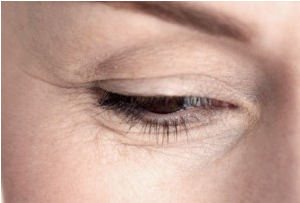
The combination of being bombarded by apparent female physical perfection and receiving early condolences for The Big Four-Oh has led me to the mirror. My breasts have never been perky but that doesn’t stop me from pulling up the skin above them toward my shoulders contemplating how much life would change with my boobs at attention. I check out my side profile and perform a similar lifting of my backside, wondering if there’s such a thing as a butt lift. I notice that I am developing the exact same wrinkles as my 88-year-old grandmother. Examination in the magnifying mirror tells me I’ve got lines that can only be erased by modern medicine. Flattening out the crease between my eyebrows, I face up to the fact that vitamin E cream just doesn’t cut it anymore.

“What would you think if I got Botox?” I ask my boyfriend Facundo.

“What?!”

“I’m not seriously considering it, I’m just thinking about it.”

“Leave your wrinkles alone, stay natural. They’re part of you. Don’t get Botox. I love you as you are. So should you.”

As much as I want my partner’s declaration of love to be enough, it isn’t. I know it needs to come from me. I can’t help but think how I reject the idea of being a size zero. It’s been years since I’ve owned a scale. Clothes that don’t fit me anymore promptly get donated. I’m proud to say I don’t diet. Why am I even considering this? I search for clarity and investigate where some of my other female friends stand. One, a 41-year-old American flight attendant, comes to Buenos Aires every few months, not only to visit me but also to get her Botox topped up. Another, a 35-year-old Brit living in Dubai, tells me that Botox is a must and adds that if I want any information about getting a lip enhancement to come to her. The attached photo confirms she’s looks fabulous. Yet another, a 36-year-old Canadian, says she’ll start Botox treatments when she turns 40. All three tell me about other friends and friends of friends who rave about the work they’ve had done. It can’t hurt to make an appointment – just to get more information. I decide to ask Marcela where she goes for Botox injections.

The next time we meet she tells me she went under the knife again – definitely her last time.

“What did you get done?” I ask. She lifts her skirt to reveal blood-soaked bandages wrapped around her upper thigh.

“Oh my God! What happened?”

“I went for liposuction to get rid of the flab in my inner thigh but instead I got this.” She pulls the bandage off revealing severe burns. “The doctor did tell me it was one of the risks.” I don’t ask where she gets her Botox injections.

Soon after our meeting, I receive a call from an old friend that I had lost contact with. Two years ago, doctors removed his cancerous thyroid gland. Although he is healthy today, he struggles with another issue.

“I don’t feel like a whole person anymore.”

“But you’re still the same person, that hasn’t changed.”

“I know but I just feel less.”

“Rick, it’s only physical. As long as your body functions properly that’s all you need to worry about. Really, when you think about it our bodies are just containers that carry us around.”  I feel like a hypocrite. Why does my container need Botox?

For days after our conversation, I’m stumped as to why I think I need to paralyze my facial muscles in the name of “beauty.” I take a closer look at the women around me. Gabriela gave herself a perpetual pout for her thirtieth birthday making it a challenge to maintain eye contact with her. Fifty-something Silvia has two distinct, lumpy scars on either side of her mouth from botched collagen injections. Marisa, 42, got the three-for-one special: boobs, liposuction, and tummy tuck. She couldn’t lift her two-year-old daughter for over a month. I resolve to make peace with my sagging breasts and deepening wrinkles.

A few weeks later my boyfriend and I attend a party. Late in the evening, we stand close to each other but talking to different people. The 22-year old I’m chatting with asks me my age.

“You’re 39?” her eyes spread wide.

“Yes, 39,” I smile politely.

“You definitely look younger than your age but your face is … is … muy marcada.”

“My face is very marked?” I laugh back.

Facundo leans in, “I like her wrinkles.”

I’m learning to like them too.

Originally published January, 2009.

Related Content:

You’re So Perfect…Except For Your Boobs

Plastic Wrap – Turning Against Cosmetic Surgery

Sweet Revenge?

Hollywood Now Seeks Authenticity

Is a ‘Bo-Tax’ Unfair to Women Who Want Their Looks to Compete?

Terrifying Trend: Models and Mini-Liposuction

Huffington Post: Former Miss Argentina Dies From Cosmetic Butt Surgery

Using Cosmetic Surgery Stop Bullying?

Post to Twitter

Beauty and the Double Standard of Aging

womenface

By Lisa Wade, PhD

Cross-posted from Sociological Images

Today I had the pleasure of reading a 1978 essay by Susan Sontag titled The Double Standard of Aging.  I was struck by how plainly and convincingly she described the role of attractiveness in men’s and women’s lives:

[For women, o]nly one standard of female beauty is sanctioned: the girl.

The great advantage men have is that our culture allows two standards of male beauty: the boy and the man. The beauty of a boy resembles the beauty of a girl. In both sexes it is a fragile kind of beauty and flourishes naturally only in the early part of the life-cycle. Happily, men are able to accept themselves under another standard of good looks — heavier, rougher, more thickly built. A man does not grieve when he loses the smooth, unlined, hairless skin of a boy. For he has only exchanged one form of attractiveness for another: the darker skin of a man’s face, roughened by daily shaving, showing the marks of emotion and the normal lines of age.

There is no equivalent of this second standard for women. The single standard of beauty for women dictates that they must go on having clear skin. Every wrinkle, every line, every gray hair, is a defeat.  No wonder that no boy minds becoming a man, while even the passage from girlhood to early womanhood is experienced by many women as their downfall, for all women are trained to continue wanting to look like girls.

These words reminded me of an idea for a post submitted by Tom Hudson.  Tom was searching for faces to help him draw and was struck by the differences in the results for “woman face” and “man face”:


 The wide variety of men’s faces, compared to the overwhelming homogeneity of the women’s faces, nicely illustrates Sontag’s point. Women’s faces are important and valorized for only one thing: girlish beauty. Men’s faces, on the other hand, are notable for being interesting, weird, wizened, humorous, and more.

On another note, the invisible but near total dominance of whiteness is worth acknowledging.

Post to Twitter

Plastic Wrap–Turning Against Cosmetic Surgery

by jassy165

Trend Line is Clear: Decline since 2004

By Margaret Morganroth Gullette

It was a shock to find after I had a squamous cell carcinoma removed from the side of my nose that I needed cosmetic surgery. I trusted my surgeon, and I trust she did as good a job as she could. But as I feared, the repair didn’t go well: the scar is still red, with a “pincushion effect,” so common it has a name. My face is no longer as symmetrical. I can’t believe anybody undergoes this voluntarily.

It may be hard to believe, but like me, American culture is turning against cosmetic surgery. Even in the movie business. An award-winning producer named Melanie Coombs observed after attending the Oscars that it was “like being at Madame Tussaud’s except they were live people.” The facial procedures called “non-invasive” are also a no-no. Martin Scorsese and Baz Luhrmann have publicly voiced their opposition to the use of Botox, frustrated by difficulties in finding actors able to express nonverbal emotion, especially anger, according to cultural critic Grayson Cooke.1 As Luhrmann notes, “their faces really can’t move properly.”

“Natural” is beginning to look good. Websites make fun of botched surgeries, showing photos of people’s unwanted post-op appearances–men as well as women. People report they look worse After. Characteristic consequences–the “wind-tunnel look,” the mismatched tiny chin, “waxworks,” skin like plastic wrap–are now uncool, according to many nonusers interviewed by sociologist Abigail Brooks of Boston College. America the Beautiful, one scary documentary, let’s a former anchor describe how facial surgery gave her permanent neuralgia, destroying her health and career. Many users do it only once. “Never again.”

Potential clients rationally fear death. When Kanye West’s mother and Olivia Goldsmith, author of the First Wives’ Club died, the lethal consequences began been piling up. Although there is still no register of mortality statistics, there are more exposés, like HBO’s special, “Plastic Disasters.” Even finding a surgeon who is certified and experienced is no guarantee of survival. The author of How We Die, Sherwin Nuland, pointed out the irony that “doctors who choose to perform an operation that is solely cosmetic are willing to accept mortality and complication rates significantly higher than those who restrict their interventions to those required for the treatment of disease.”

Ageism is a killer in this as in other ways. Most cosmetic surgery is driven by fear of aging-past-youth. In 2007 the average age of those receiving cosmetic surgery in the United States was 42.6. “Passing” as younger was promoted for decades by surgeons who didn’t have enough reconstructive work. The Federal Trade Commission under Nixon and then the Supreme Court made it illegal for the AMA to forbid surgeons from advertising. Third-party financing of procedures brought operations within the reach of lower-income women.

Fashion and celebrity magazines made seeking slender youthfulness seem obligatory. “Forcibly lowered self-esteem looks to the sufferer like real ‘ugliness’,” Naomi Wolf explained. It began to be said that every narrow departure from the ideal, including normal processes of female maturity (e.g., change in size after pregnancy, wrinkles) could be sold to consumers as a deformity. Other kinds of doctors without appropriate training or certification moved to supplement their practices by pursuing anxious patients’ discretionary income. Promoters said, gaily, this is an unstoppable trend. Feminists, gagging, agreed.

The promotion of plastic surgery constitutes an ethical crisis of national dimensions, since the ugliness effect impinges on people only because they are growing older. People who would never visit a surgeon are thrown into some degree of self-hatred; and younger people may look with disfavor on faces and bodies that are simply doing what comes naturally.

Trend Finally Going the Other Way

Yet the good news is that the trend is finally going the other way. Fact: The number of total cosmetic procedures reached a peak in 2004 (at 11,855,000), and has dropped every year since, according to data from ASAPS, which extrapolates the data from those of its board-certified surgeons who respond. (Perhaps the ones who write in are still in business and doing well). In 2010 the total was down to 9,336,000–a decrease of over 20% from 2004.2 (The numbers dropped even before the economic crisis of 2008.)

Surgeries–the most dangerous procedures–have also dropped, from 2.1 million in 2004, to 1.6 million in 2010–a drop of almost 25%. Breast augmentation was 334,00 in 2004; now only 318,000 in 2010. Lipoplasty was 478,251 in 2004; now only 289,016 in 2010.

The numbers for breast augmentation, the highest in invasive surgeries, dropped 11% from 2007 to 2008 and are lower in 2010. There is new evidence of cancer surrounding the breast in women with implants, which surgeons in both ASAPS and ASPS had been told in a webinar to downplay, Public Citizen’s Health Letter reported in February.3

Seeing the trend away from their invasions, surgeons now pay for ads offering “unfixed”-looking procedures. The top five procedures for women 35 to 50 in 2010 were all skin-related, like Botox.

After the age of fifty, the percentage of women obtaining any procedure drops dramatically, from 44-47% depending on the year, to about 25%. And fortunately for everyone but surgeons seeking trade, the older half of the “Boomers” has aged beyond the high-risk period–ages 35-50–at which women are most vulnerable. They have grown up and turned away.

Contrary to the myth, people are not going abroad for procedures. Brandon Alleman and his colleagues of the University of Iowa Carver College of Medicine in Iowa City, conducted a survey of businesses engaged in facilitating overseas medical travel for U.S. residents. The companies that completed the survey–representing around 70 percent of the market–had referred about 13,500 U.S. patients for care overseas, a number far lower than prior reports of between 500,000 and 2 million.4

Growing popular distaste also involves heightened aversion to danger and care for health. “First, do no harm,” critics enjoin cosmetic surgeons.

Why is “natural” looking better, aside from the fear of pain, deformity, death, and looking unfashionable?

Nonusers told sociologist Abigail Brooks that they not only find the “fixed” looks of others repugnant, they resist the ideologies behind the ageist beauty myth. They may be inspired by feminist theory, women’s-health activists, or the positive-aging movement. “Natural” to them means accepting and appreciating the body’s own processes and valuing maturity on many other measures.5 Maybe some female Boomers are indeed changing, aging-past-youth in America, one refusal at a time!

In 1992, despite normalizing trends, the number of cosmetic surgeries in the US was still relatively small. By 2004 it had grown vertiginously. Since then it has started to drop. There are still powerful forces promoting the procedures to women of a certain age–including the companies that fire employees in their middle years on the assumption that they are “too old.” Women sue for age discrimination ten years younger than men. As sexist ageism gets worse, surgeons and magazines and yes, even friends, falsely promise a response by calling the procedures “anti-aging.”

Newspapers still publish articles based on statistics from the surgeons’ self-serving organizational press-releases, emphasizing what rates are up (as the New York Times did recently, in an article by Tara Parker-Pope with the headline, “A Decade of Boosting Breast Size”).6 Rates for some procedures may go up in any given year, but the trend line is clear, as the article was forced to note. Journalists can be guilty not only of implying that getting fixed is popular and “normal,” they are missing the real story.

Make no mistake, millions still go under the knife. The number of surgeries still constitutes a public health emergency that needs to be addressed with a registry of deaths and disfigurements and with better certification. But eventually we may say that the Era of Normalized Sexist Ageism lasted not much more than 12 years.

© 2011 Margaret Morganroth Gullette

* * *

Margaret Morganroth Gullette is the author of Agewise: Fighting the New Ageism in America (U of Chicago Press, April) and is a Resident Scholar at the Women’s Studies Research Center, Brandeis University. She is the author of four books in age studies. Aged by Culture (also University of Chicago Press), was chosen a Noteworthy Book of the year by the Christian Science Monitor. It was nominated for a Pulitzer and received an Honorable Mention from the Gustavus Myers Center for the Study of Bigotry and Human Rights. Declining to Decline: Cultural Combat and the Politics of the Midlife won the Emily Toth award in 1998 for the best feminist book on American popular culture. Her first book in age studies is Safe at Last in the Middle Years. To read about Margaret Morganroth Gullette’s Free High School for Adults visit www.newtonsanjuan.org and click on “Adult Education.”

—————

1. Cooke, Grayson, “Effacing the Face: Botox and the Anarchic Archive,” Body & Society 2008 14:23.

2. My data is all from ASAPS: http://www.surgery.org/sites/default/files/2009trends.pdf surgery.org/sites/default/files/2007/Surgical_nonsurgical.pdf and Quick Facts for many of the years under investigation (2004-2010).  Other references are in the chapter “Plastic Wrap” from my book Agewise.

3. Public Citizen, “Health Letter,” February 2011 (Vol 27 #2).

4. Reported by Peeples, Lynne, “Few Americans travel overseas for medical care,” Reuters, Dec. 31, 2010. Retrieved at http:/ /uk.reuters.com/article/2010/12/31/health-us-travel-overseas-idUKTRE6BU28C20101231.

5. Brooks, Abigail, “Growing Older in a Surgical Age: An Analysis of Women’s Lived Experiences and Interpetations in an Era of Cosmetic Surgery,” Ph.D. diss., Boston College, 2007.

6. Parker-Pope, Tara, “A Decade of Boosting Breast Size,” New York Times, March 21, 2011. Retrieved at http://well.blogs.nytimes.com/2011/03/21/a-decade-of-boosting-breast-size/.

——————

Related Content:

Hollywood Now Seeks Authenticity

Ironing Out the Wrinkles of Wanting Plastic Surgery

You’re So Perfect…Except For Your Boobs

Sweet Revenge?

Is ‘Bo-Tax’ Unfair to Women Who Want Their Looks to Compete?

Terrifying Trend: Models and Mini-Liposuction

Huffington Post: Former Miss Argentina Dies From Cosmetic Butt Surgery

Using Cosmetic Surgery Stop Bullying?


Post to Twitter

Seeing Beauty in All: Over-40 Nudes

Elderly couple on beach

Elderly couple on beach

By Sharon Haywood

In the summer of 2010 photographer Keith Seat gave life to the project “Seeing Beauty in All: Over-40 Nudes” based out of Washington, DC. He has compiled a wonderful array of black-and-white photos, using non-professional models over the age of 4o. (The oldest models to date are in their mid-70s). He explains his motivations:

Earth-MotherMy Over-40 Nudes project seeks to expand conventional concepts of physical beauty beyond people with bodies that are youthful and conventionally near perfect. I believe we can enhance that definition by seeing older bodies – complete with imperfections and evidence of aging – as beautiful because they have been lived in and have experienced life with all its joys and sorrows. My goal is to help us reclaim our bodies – to see ourselves in our fullness, to expand our view of beauty to the reality around us, and to appreciate the glory of bodies that have fully lived.

His commitment to producing images that celebrate diversity is also reflected in his approach when working with the models:

Kennitta -- Dramatic Hand-1My interactions with the people I am photographing goes well beyond the basics of the environment and poses, to help them feel relaxed and un-self-conscious, and to discussions of their perceptions of their bodies and the experience of being seen and seen as beautiful. This causes many participants to feel more self-acceptance and satisfaction with their bodies, and sometimes even a deep sense of healing.

lesbian couple

We are thrilled with the level of diversity, not only with size and body type, but also with the varied representation of models of different races and sexual orientations. And that’s not the only reason we’re happy to highlight his work. Additionally, Seat states that he is “not about significant retouching or ‘photoshopping.’ Instead, my project celebrates the beauty that is actually present in over-40 nudes.”

coupleBecause Seat does not use professional models, he invites women and men over the age of 40 in the Washington, D.C. area to participate in this ongoing project, which he also hopes to publish as a book.

* * *

For additional information about this wonderful exhibit, visit his website at:

www.silverlightart.com and check out his Facebook page here.


Related content:

The Lowdown on Aging

The Old and Tired

View Your Body As If You Were 80

Face It! – What Women Really Feel as Their Looks Change, The Book

Huff Post Highlights Beautiful Older Women

Cougars: Unfortunately Coming to a Town Near You

Older Leading Ladies and the Evolution of Hollywood

Post to Twitter

Older Leading Ladies and the Evolution of Hollywood

Photograph by: Handout, Disney via the Montreal Gazette
Meryl Streep

Copyright Matt Sayles - Associated Press

Between 2003 and 2009, the number of roles for older women in film and on television more than doubled. Rebecca Keegan of the Los Angeles Times wrote:

According to the Screen Actors Guild, in 2003 women older than 40 accounted for 11 percent of the female film and TV roles (excluding reality shows); by 2009 that number was up to 28 percent. There’s still a gender gap when it comes to age in Hollywood — men in the over-40 category nabbed 42 percent of the roles last year, but older actresses are gaining ground.

Although 28 percent is far from a majority, we have to celebrate the fact that in the 21st century actresses over 40 years of age are being taken much more seriously. Keegan speculates that there is

a growing awareness in the movie industry of the untapped potential of older audiences, especially female ones. The women who helped drive box-office hits like The Blind Side, The Devil Wears Prada and Sex and the City would rather go out and watch Meryl Streep flirt with Alec Baldwin than stay home and play on their X-Boxes like the young adults that studios so often court.

Meryl Streep, Diane Lane, Demi Moore, Helen Mirren, Halle Berry, Julianne Moore, Naomi Watts, Julia Roberts, and Sandra Bullock are just a few of the women who are chipping away at the glass ceiling in Hollywood. As consumers, we can affect change via our movie choices. Let’s make 2011 the year these leading ladies smash that tired old ceiling altogether.

Read the full story by Rebecca Keegan of the Los Angeles Times here.

Related Content:

View Your Body As If You Were 80

The Old and Tired

Seeing Beauty in All: Over-40 Nudes

Face It! – What Women Really Feel as Their Looks Change, The Book

Huff Post Highlights Beautiful Older Women

Cougars: Unfortunately Coming to a Town Near You

Post to Twitter

The Lowdown on Aging

Taken from the Dove Pro-Age Campaign

Taken from the Dove Pro-Age Campaign

By Cherry Woodburn at The Mother Load

These days, and for many years now, I can say with ease:

• I’m smart.
• I’m confident in my abilities.
• I’m a good problem solver.
• I say no.
• I make friends easily.
• I’m willing to take risks.
• I’m worth showering myself with self-care.
• I’ve learned to tame my inner shrew

Although I believe in myself, I’m not perfect. And I want to be completely honest with you: I’m struggling with getting older. I haven’t yet tamed the voice of the inner shrew-on-aging. I hear her in the cold, stark reality of morning light when I put on eyeliner and use my index finger to pull my skin away from the side of my eye for ease of application, and release my finger only to have the skin decide to stay out there for a bit of a rest. Then slowly, almost begrudgingly, my beloved piece of skin, that’s been with me all my life, decides to make its way back to the place where it started. The shrew-on-aging lets me know that, like a dried up white rubber band, my skin’s just not holding things together the way it used to.

For the first time in my life I’ve reached an age which I have trouble saying out loud. My brain (vs. the resident shrew-on-aging who’s bribed and owned by the media) KNOWS that I am succumbing to a society-induced dis-ease. And I need some support to stop succumbing.

So this old lady is hoping to enlist your support by providing the following information I wish I’d known sooner.

1. Old is a relative term.

a. When you’re 30, you suddenly understand that 25 is young.
b. When you’re 40 you chuckle at the 30-year-olds that are complaining about looking older.
c. When you’re 50 you realize you’ll never feel “your age” because you spent your life with misconceptions about what 50, or any age older than you are, feels like.
d. When you’re 60 you realize that you definitely have wrinkles and that when you’re 70 or 80 or 90 you’ll look back and think how great you looked and felt with them.

2. Cosmetic surgery has taken away the level playing field. We aren’t all aging together or “at the same rate”. That can make the body-signs of aging more challenging to accept.

a. That being said, don’t start with the procedures because there will always be another procedure you could have, and another one and another one. There will also always be someone you can compare yourself too (like the plastic surgeon that goes to the same yoga studio I do) that looks younger because she’s had more procedures. Comparison is never a wise idea.
b. The cosmetic & cosmetic surgery industries are making HUGE profits off of your fear of getting older.
c. The industries play on that fear with ads, ads and more ads telling you you’re not good enough the way you are. “Look younger!” they shout to women of any age.
d. You’re still 20, or 30 or 40 or 50 or 60 or 70 or 80 years old no matter how much botox etc. is keeping your face and neck wrinkle-free.
e. Gloves will have to come back into fashion all year round to hide the proof-is-in-the-hands. Do you really want to be wearing white gloves in the summer?

3. Old is just a word, like short or tall are. Old does not inherently have a negative meaning.

a. It’s time to venerate the older generations for the stories and experience they have.
b. You will one day become that older generation.
c. If you don’t become old, it’s because you died.

Aging really is a gift. I realize it more and more. I’m alive to see my grandchildren; to pass on the love and lack of rules that grandparents are supposed to do.

Granted I still have to contend with the image that some of the younger generations have that people, particularly women, of the age of 60 don’t have a lot to offer. They’re wrong. So I’m asking you to join me in a huge F*&% You to a culture that says there’s something wrong with living. Because living equals aging.

* * *

This post was originally published at The Mother Load. Cross-posted with permission.

Cherry invites you to sign up for a free 5-week program I designed to help other women get on the path to increased self-esteem. For more information, click here.

http://borderlessthinking.com
http://cherrywoodburn.wordpress.com/
http://twitter.com/cherrywoodburn
http://blogtalkradio.com/cherrywoodburn

Related Content:

View Your Body As If You Were 80

The Old and Tired

Seeing Beauty in All: Over-40 Nudes

Face It! – What Women Really Feel as Their Looks Change, The Book

Huff Post Highlights Beautiful Older Women

Cougars: Unfortunately Coming to a Town Near You

Older Leading Ladies and the Evolution of Hollywood

Going Gray: Not a Black and White Matter

Post to Twitter

View Your Body As If You Were 80

Irene Sinclair models for the Dove Campaign for Real Beuaty
Irene Sinclair models for the Dove Campaign for Real Beauty

Irene Sinclair models for the Dove Campaign for Real Beauty

By Sharon Haywood

“What would your 80-year-old self say if she saw you right now?” I love this question. I thank Julie M. Green for posing it in her piece at Real Zest. Do you believe when you reach 80 that you’ll look back of photos of yourself at 20, 30, 40 or even 50 and think:

“Look at that paunch! I really should have done more sit-ups.”

“Why didn’t I get a breast lift?”

“What was I thinking? I should have never gone out in public wearing a bikini!”

Or do you think your inner dialogue at 80 would probably sound something more like:

“Why did I obsess so much over my belly? I could have eaten more chocolate.”

“I didn’t realize I looked so good.”

“I really should have gone to the beach more.”

Today at 40-something, when I look at pictures of myself in my teens and twenties I can’t help but be saddened. My self-image was so distorted. I looked in the mirror and saw a young woman who was obese, when in fact I was nowhere near it. And even when I was at my highest weight, I can now look at my plus-size photos and see beauty. When I find myself reverting back to hating on my body, I call on what Green refers to as my “inner octogenarian” to shake me back to reality. In 40 years when I’m in my 80s, I have little doubt I will care how wide my backside is or how much my underarms jiggle.

How about you?

Read Green’s thoughtful post, What Would Your 80-Year-Old Self Say? at Real Zest.

Related content:

The Lowdown on Aging

Seeing Beauty in All: Over-40 Nudes

Face It! – What Women Really Feel as Their Looks Change, The Book

Huff Post Highlights Beautiful Older Women

Cougars: Unfortunately Coming to a Town Near You

The Old and Tired

Older Leading Ladies and the Evolution of Hollywood

Post to Twitter

Gray Matters

grey matters

grey matters

By Emili Vesilind
Special to the Los Angeles Times

The brighter side of gray hair
A movement is underway as everyday women forgo hair dyes and let their locks go gray.

Washing that gray right out of your hair (to borrow from the famous song) is no longer a mandatory part of getting older. So asserts a growing cadre of American women who are embracing their naturally silver hair tones.

Letting tresses go gray (or white or salt-and-pepper) may not be the Hollywood way, but it’s become a hot topic for real women all over the country. Seeds of a colossal shift in thinking — away from the arcane preconception that going gray means “letting yourself go” — have already taken root.

Going gray is the most commented-on theme on More magazine’s website, which caters to women over 40. The “Today” show recently featured a seven-minute clip about whether it’s “OK to go gray,” and how to do so gracefully. And recently published books about ditching dye-jobs for good, including Diana Lewis Jewell’s “Going Gray, Looking Great!” and Anne Kreamer’s “Going Gray: What I Learned About Beauty, Sex, Work, Motherhood, Authenticity, and Everything Else That Really Matters,” continue to sell briskly, and (in the case of Jewell’s book) have inspired the formation of online mini-communities based on a shared belief that going gray is more than OK.

Read More: Los Angeles Times

Related Content:

Going Gray: Not a Black and White Matter

Post to Twitter

Going Gray: Not a Black and White Matter

Photo courtesy of www.goinggraylookinggreat.com

Photo courtesy of www.goinggraylookinggreat.com

By Sharon Haywood

Courtesy of genetics, my hair started graying in my late teens. At that point, I had already been initiated into the world of coloring my hair. At 14, I experimented with Sun-In that transformed my bangs brassy orange. Then, I used facial bleach to whiten a thick strip of my shoulder-length hair along one side of my face. Soon after came L’Oréal in various shades of red, burgundy, and violet, and then an extended period when I used only black vegetable dyes. As a teenager, I colored my hair to have fun. To be cool. To experiment with different looks. To discover my own style. Today, I dye my hair for one reason and one reason only: To cover the gray.

My Irish grandmother also started graying in her teens. She had two funky white stripes that started at her temples and flared back like The Bride of Frankenstein. She was pure white by 25. I have to admit that around 19 years old, I felt short-changed when I noticed fresh sprouts of gray hairs. They did not congregate together to paint a gorgeous streak of white like Grandma’s had. No, instead the unruly hairs peppered themselves throughout my hairline, refusing to adhere to any sort of pattern. I wasn’t going to look funky. I’d just look old. I felt as if I’d had no choice but to commit to a lifetime of coloring.

At 41, I have a substantial amount of white and gray hair that, when I allow it to grow in, contrasts greatly against my chestnut-mahogany hair. I’m unsure of how much gray I really have. The thing is the longest I’ve gone without dying my hair was for six months about a year and a half ago. When I reached half a year dye-free I shamefully crumbled to the pressure to conform and covered the couple inches of virgin hair. It’s been just over two months since I last disguised my roots. I am tired of dying of my hair. I resent that every six weeks I have to either do it myself or visit my hairdresser. I would love to see how my long wavy hair would look in its natural salt-and-pepper state. But I struggle with making the commitment to go color-free. I want to challenge myself to see beyond what society says is attractive. But I recognize that my perception of how I look is skewed because of the repetitive messages that “gray hair on a woman equals old and ugly.”

When I decided to stop coloring my hair for those six months, I readily took on the self-imposed challenge to accept my aging hair. I didn’t realize what a body image hurdle it would be. I had good days and bad days. I spent time a fair amount of time examining my hair and how its new lighter shades looked against my pale skin. I tried erasing what I had been instructed to believe and see how it could be pleasing to look at. Even pretty. On good days, I was more accepting of my new silvery strands sprinkled throughout my roots, strongest around my face. I would get excited – and impatient – when imagining what my hair would look like in a year to 18 months. Thick white roots on each temple remained hidden under my bangs. Secretly, I hoped that in time the pure white growth underneath would streak the part I showed to the world.

On bad days, the external pressures to follow the female hair norm clouded my vision and extinguished any positive thoughts I had of my authentic hair. The number of unsolicited opinions and conclusions about my decision to go natural astounded me. Some insisted I was a rebel making a political statement. Others promised I would hook horrible.

“Women with long gray hair look like hags.”

“You’ll have to cut your hair short.”

“Don’t do it, Sharon, you’ll look so old.”

My assertions that beauty is a matter of perception didn’t do much to change their minds. Their arguments wore away at my resolve. If I presented the world with my natural hair I would unequivocally be considered unattractive. Admittedly, I also sought out opinions. My closest friends wanted to be supportive but most would try to hide their grimace and say something like, “Really? But I love your brown hair.” I wish I could say thanks. My brown hair no longer exists. The brown hair people love so much is courtesy of Clairol. My husband, well, he’s dead-set against it. I thought perhaps he would be supportive, especially because my size makes no difference to him. He vehemently doesn’t want me to get Botox or any type of cosmetic intervention. But it seems that he draws the line at hair color. More than one argument has ensued over the dilemma to dye or not to dye. But I haven’t abandoned the idea of showing off my true hair color, whatever that may be.

These days, whether I’m walking or on public transport, I regularly scan the stream of faces – men and women alike – for white and gray crowns. Many more men display their natural silver streaks and white patches than women. I try to imagine what the elderly women with their dyed, coiffed hair would look like with their natural tresses. I do the same for my almost-90-year-old Italian grandmother who still faithfully dyes her hair every six weeks. But for those women who I’ve seen revealing their natural locks, I’m pleased to say that I can see the beauty in their hair. What’s more, I admire it. I hope that when I give up coloring once and for all I’ll be able to view myself—and my hair—through the same loving lens.

Read more about going gray in this thought-provoking piece, “Changing Perceptions, One Hair At a Time” at the website Going Gray Looking Great

Related Content:

Gray Matters

Face It! – What Women Really Feel as Their Looks Change, The Book

Post to Twitter

Face It! – What Women Really Feel as Their Looks Change, The Book

book_shadow

Appreciating Your Value as You Age by Catherine Saint Louis at the NY Times

book_shadow

Aging is an indiscriminate leveler. You might have been a shapely bombshell who made heads turn. You might have honed your intellect and résumé and let looks take a backseat. Still, most of us will pass a mirror one day and wonder who is that stranger with the droopy eyelids.

It would be easy to dismiss worries about such an aesthetic concern as weak. But two models-turned-psychotherapists argue in “Face It,” their new guide for women, that struggling with changing looks can be no less daunting than dealing with a financial loss, a demotion at work or a divorce.

After decades of counseling patients, Dr. Vivian Diller and Dr. Jill Muir-Sukenick say that dread about growing older can spur an existential crisis of sorts. Such dread isn’t about vanity per se, but has more to do with a loss of potential and questioning one’s place in the world. It can lead to depression, alcohol abuse or sleep disorders, they say.

Yet, therapy isn’t usually on the short list of solutions for those bothered by an aesthetic “problem.” A lunchtime laser treatment or a $180 face cream is.

Dr. Diller, 56, and Dr. Muir-Sukenick, 57, are here to tell American women – no matter how stellar their accomplishments – that it’s not superficial to admit that aging is upsetting. They encourage their readers to figure out what’s driving them to have daydreams about a refined face-lift rather than scheduling one.

Read the full review at The New York Times

Related content:

The Lowdown on Aging

The Old and Tired

View Your Body As If You Were 80

Seeing Beauty in All: Over-40 Nudes

Huff Post Highlights Beautiful Older Women

Cougars: Unfortunately Coming to a Town Near You

Older Leading Ladies and the Evolution of Hollywood

Going Gray: Not a Black and White Matter

Post to Twitter